News
World Quantum Day 2026: Understanding Qubits, Bloch Spheres, and the Future of Quantum Technology
Apr
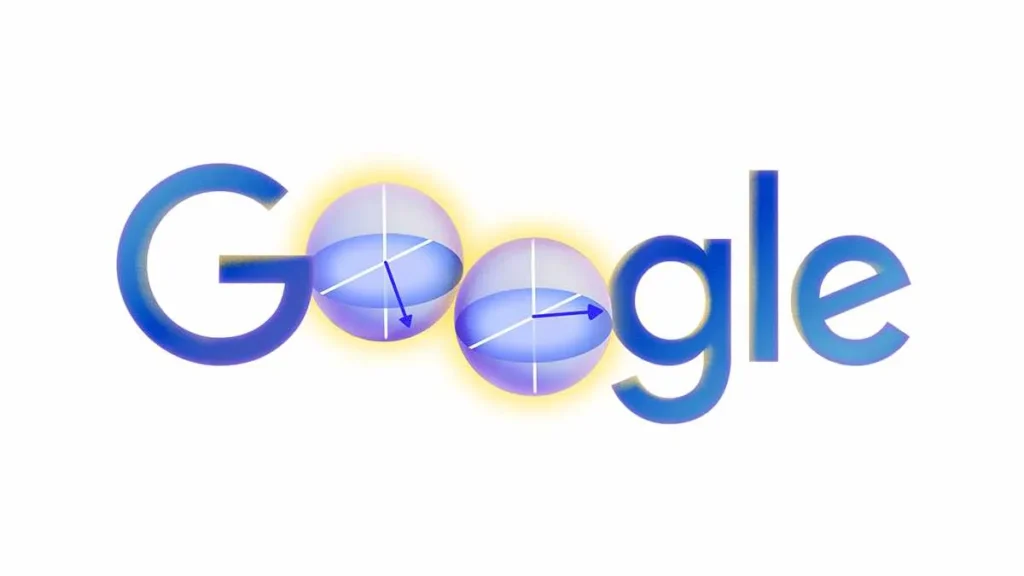
Every year on April 14, the global scientific community celebrates World Quantum Day—a moment dedicated to one of the most fascinating and transformative fields of modern science: Quantum Mechanics. In 2026, the spotlight shone even brighter as Google marked the occasion with a creative Doodle illustrating the concept of Bloch Sphere, helping millions better understand how quantum computing works.
What Is World Quantum Day and Why It Matters
World Quantum Day is more than just a symbolic celebration—it highlights the rapid evolution of quantum science and its real-world applications. From next-generation computing to breakthroughs in medicine and cybersecurity, quantum technologies are shaping the future of global innovation.
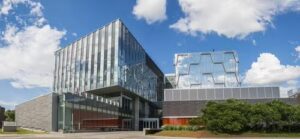
Institutions like the Institute for Quantum Computing have become global leaders in advancing this field. Located in Waterloo, this hub is often referred to as the heart of “Quantum Valley,” where research, startups, and global tech giants collaborate to turn theory into reality.
Qubits vs Classical Bits: The Core Difference
Traditional computers rely on binary bits—either 0 or 1. Quantum computers, however, use Qubit, which operates under a principle called Superposition.
Instead of being limited to one state, a qubit can exist as both 0 and 1 simultaneously. This unique capability allows quantum computers to process massive amounts of information far more efficiently than classical systems.
The Role of the Bloch Sphere
To visualize how qubits behave, scientists use the Bloch Sphere—a 3D model representing quantum states.
∣ψ⟩=cos(θ2)∣0⟩+eiϕsin(θ2)∣1⟩|\psi\rangle = \cos\left(\frac{\theta}{2}\right)|0\rangle + e^{i\phi}\sin\left(\frac{\theta}{2}\right)|1\rangle
This equation describes a qubit’s state in terms of angles on a sphere. Points on the surface represent pure quantum states, while positions inside the sphere represent mixed states. Google’s 2026 Doodle cleverly illustrated this concept, making complex quantum ideas more accessible to the public.
Quantum Valley: A Global Innovation Hub
The region around Waterloo has become a thriving ecosystem for quantum innovation. Alongside the Institute for Quantum Computing, organizations like the Perimeter Institute for Theoretical Physics collaborate with industry leaders such as Xanadu to accelerate breakthroughs.
This ecosystem includes:
- Over 400 researchers working in quantum science
- Dozens of startups driving commercialization
- Millions of dollars in investment fueling innovation
One example is High Q Technologies, a company developing advanced systems to study molecular structures—potentially revolutionizing drug discovery and disease research.
Real-World Applications of Quantum Technology
Quantum mechanics may sound abstract, but its applications are very real and rapidly emerging:
- Quantum Computing: Solving complex problems beyond classical limits
- Cybersecurity: Creating unbreakable encryption systems
- Healthcare: Accelerating drug discovery and disease modeling
- Materials Science: Designing next-generation materials
These advancements are powered by core quantum principles like superposition, entanglement, and tunneling—concepts once confined to theory, now driving innovation.
The Future of Quantum Innovation
As research continues, quantum technology is expected to redefine industries and economies worldwide. Governments, universities, and private companies are investing heavily to stay ahead in what many call the “second quantum revolution.”
World Quantum Day serves as a reminder that we are only at the beginning of this journey. The discoveries being made today could fundamentally reshape how we compute, communicate, and understand the universe.
FAQs
1. What is a qubit?
A qubit is the basic unit of quantum computing that can exist as both 0 and 1 simultaneously.
2. What does the Bloch Sphere represent?
It visualizes the state of a qubit in three dimensions.
3. Why is quantum computing important?
It can solve problems that classical computers cannot handle efficiently.
4. What is World Quantum Day?
It’s an annual event celebrating advancements in quantum science on April 14.
5. Where is Quantum Valley located?
It is centered in Waterloo, Canada, a global hub for quantum research.

