
News, uss john p murtha
USS John P. Murtha Returns with Orion Spacecraft: A Milestone for NASA’s Artemis II Mission
Apr
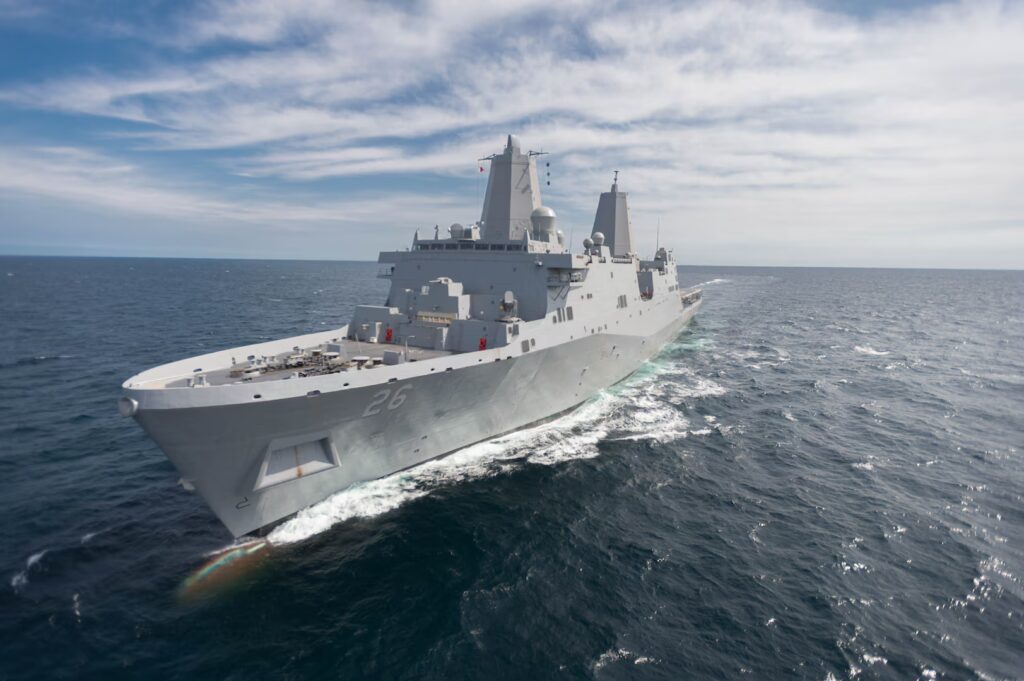
The successful return of the USS John P. Murtha (LPD-26) to San Diego marks a historic moment in modern space exploration. After completing a critical recovery mission in support of NASA’s Artemis II program, the naval vessel safely transported the Orion spacecraft back to shore following its Pacific Ocean splashdown.
This achievement underscores the powerful collaboration between military precision and space innovation, paving the way for humanity’s return to deep space exploration.
Artemis II: A New Era of Human Spaceflight
The Artemis II mission represents a major leap forward as NASA’s first crewed lunar mission in more than 50 years. Designed to send astronauts beyond the Moon and back, Artemis II serves as a crucial stepping stone toward future missions to Mars.
At the heart of the mission is the Orion spacecraft, which carried astronauts on a multi-day journey through deep space before reentering Earth’s atmosphere and splashing down in the Pacific Ocean.
The Critical Role of USS John P. Murtha
The USS John P. Murtha was tasked as the primary recovery vessel, responsible for retrieving both the Orion capsule and its crew after reentry.
Why This Ship Was Chosen:
- Advanced well deck for spacecraft recovery
- Onboard medical facilities for astronaut care
- Helicopter landing capabilities for rapid transport
- Sophisticated communication systems for mission coordination
This combination makes the vessel uniquely suited for complex recovery operations involving both human crews and sensitive aerospace technology.
How the Recovery Operation Unfolded
The recovery mission was a carefully coordinated effort involving multiple teams:
- Navy divers from Explosive Ordnance Disposal units secured the capsule in open water
- MH-60S Sea Hawk helicopters tracked Orion during descent and assisted with astronaut retrieval
- NASA engineers conducted initial inspections onboard the ship
Once secured, the spacecraft was transported back to San Diego for further evaluation and data analysis.
The operation was completed smoothly, marking a significant success for both NASA and the U.S. Navy.
A Tribute to John P. Murtha’s Legacy
The ship is named after John P. Murtha, a longtime advocate for the U.S. military. Officials highlighted that participating in such a historic mission is a fitting tribute to his legacy of service and support for national defense.
Why This Mission Matters
The success of Artemis II and its recovery operation signals a turning point in space exploration:
- It validates systems for future lunar landings
- It provides critical data for long-duration human spaceflight
- It strengthens collaboration between military and civilian space programs
Leaders, including California Governor Gavin Newsom, emphasized that the mission represents a “full-circle moment” and a shared achievement for humanity.
What Comes Next for Artemis
With Artemis II completed, NASA will now:
- Analyze data from the Orion spacecraft
- Refine systems for upcoming missions
- Prepare for future lunar surface landings under the Artemis program
These steps will ultimately support NASA’s long-term vision of sending humans to Mars.
FAQs
1. What is Artemis II?
It is NASA’s first crewed mission to travel beyond the Moon in over 50 years.
2. What role did USS John P. Murtha play?
It served as the primary recovery ship for the Orion spacecraft and astronauts.
3. Where did the spacecraft land?
It splashed down in the Pacific Ocean.
4. Why is the Orion spacecraft important?
It is designed to carry astronauts on deep space missions.
5. What is the next step after Artemis II?
NASA will prepare for future lunar missions and eventual Mars exploration.

